Residential Storm Damage Restoration in Atlanta, GA

Owens Corning Preferred Contractor restoring roofs, siding, and gutters after wind and hail across Metro Atlanta. Emergency tarping, photo documentation your adjuster can work from, and a free inspection.

Request A Quote

What Storm Damage Restoration Means for an Atlanta Home

Storm damage restoration secures a damaged home, documents what the storm did, and rebuilds the exterior back to its pre-storm condition. Elevated Roofing Solutions covers the building envelope: roof, siding, gutters, fascia, and soffit.

Fast restoration protects 4 things: the interior from water that enters through the opening, your insurance claim before it expires, the structure from rot and mold, and your out-of-pocket cost.

Atlanta homeowners call after 4 event types: spring hail, straight-line wind, fallen trees and limbs, and the tropical systems that reach Georgia inland each season.

Free 45-minute diagnosis

No obligation. Same or next day across Atlanta

What Residential Storm Damage Restoration Covers

Four damage types account for nearly every storm restoration call in Metro Atlanta.
01

Wind Damage to Roofs, Siding & Fencing

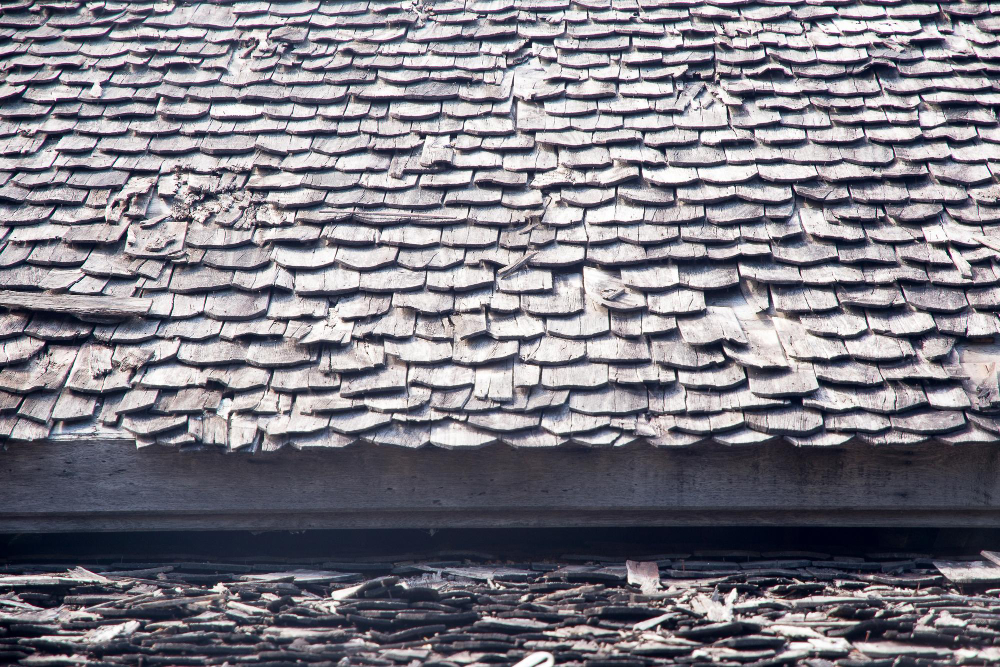
Straight-line winds above 60 mph (97 km/h) lift shingle tabs, crease them at the seal line, tear ridge cap, and pull siding panels loose. Creased tabs look intact from the ground and fail on the next storm.

02

Hail Damage to Shingles & Gutters

Hail bruises the asphalt mat under the granules, leaving soft spots that split open months later. Dented gutters, downspouts, and metal vents are the visible evidence adjusters look for first.

03

Fallen Tree & Branch Damage

Limbs puncture decking, crush ridge lines, and tear gutters off fascia. We remove debris from the roof, tarp the opening, and rebuild the affected structure.

04

Hurricane & High-Wind Roof Damage

Atlanta sits roughly 250 miles (402 km) inland, so tropical systems arrive as sustained wind and heavy rain rather than surge. Sustained wind over hours loosens fasteners across whole slopes.

Signs Your Home Has Storm Damage

Five signs point to storm damage. Any one of them justifies an inspection before your claim window closes.

Missing, Cracked, or Lifted Shingles

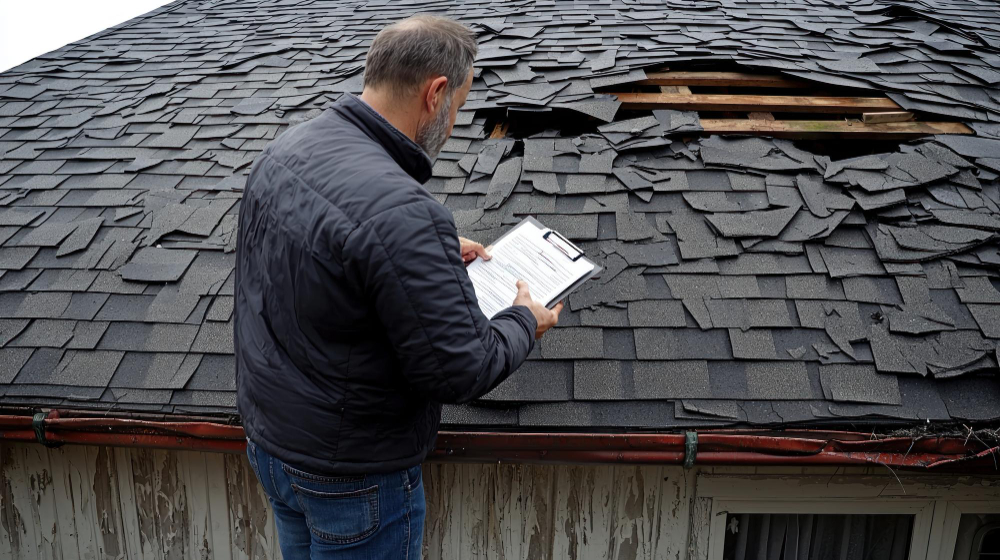
Gaps on a slope, shingles in the yard, or tabs that lift by hand. Creasing across a tab means wind bent it past the seal, and that shingle no longer seals down.

Dented or Bruised Shingles from Hail

Hail bruises feel soft under thumb pressure and often show as dark circles where granules knocked loose. Adjusters count hits per 10×10 ft (3×3 m) test square.

Water Stains or Leaks After a Storm

A new ceiling stain, damp drywall, or a musty smell in the attic within days of a storm means the envelope opened. Water travels along rafters before it shows.

Downed Limbs or Debris on the Roof

Branches resting on shingles grind granules off with every gust. Debris in valleys blocks drainage and backs water under the shingle course.

Damaged Gutters, Fascia, or Siding

Dented gutters, separated seams, pulled-away fascia, and cracked or dislodged siding panels. Gutter dents are often the first hail evidence a homeowner spots.

What to Do Immediately After Storm Damage

Four steps, in this order.

1

Prioritize Your Family's Safety First

Stay clear of downed power lines, sagging ceilings, and standing water near outlets. Leave the property and call 911, if you smell gas or see structural sagging. Do not climb onto a wet or damaged roof.

2

Document the Damage With Photos

Photograph everything from the ground before anything gets moved or covered: the roof from each side, gutters, siding, fallen limbs, interior stains, and the yard. Timestamps matter to an adjuster.

3

Cover Exposed Areas With Emergency Tarping

Call for professional tarping rather than climbing up yourself. Most policies cover reasonable emergency mitigation, and keeping the receipt matters. Tarping runs $300-$800 on a typical opening.

4

Call a Licensed Storm Damage Contractor

Get a roof-level inspection with photo documentation before you file. Confirm the contractor is licensed and insured, and be cautious of crews who show up door to door within hours of a storm.

WHY TIMING DECIDES THE OUTCOME

Risks of Waiting to Repair Storm Damage

Benefits of Immediate Storm Damage Restoration

Storm damage restoration and roofing inspection
Storm Damage Restoration Experts
5 From the emergency call to the final walkthrough, we guide your property through every stage of storm restoration.
How It Works

Our Residential Storm Damage Restoration Process

Five steps from the emergency call to the final walkthrough.

1

Emergency Inspection & Damage Assessment

We inspect the roof, siding, gutters, and attic, then photograph every finding with location noted. Drone inspection covers slopes too damaged to walk safely.

2

Emergency Tarping & Board-Up

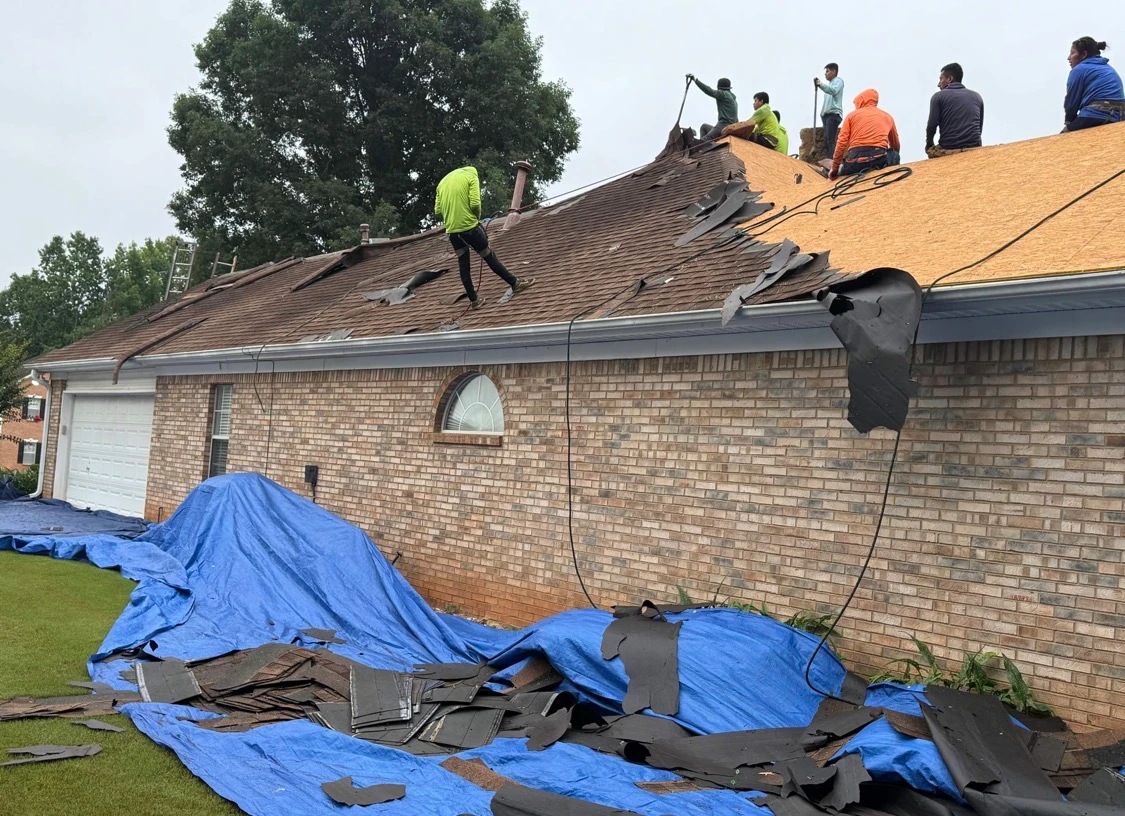
Exposed roof sections get heavy-duty tarp secured to the deck, and broken windows get boarded. This stops the damage from growing while the claim moves.

3

Insurance Documentation & Claim Support

You receive a photo-documented damage report and a written estimate for our scope of work. We meet your adjuster on site and walk the damage with them.

4

Repair or Full Restoration

Targeted repairs for isolated damage, full replacement for widespread damage. Roof, siding, gutters, fascia, and soffit restored to pre-storm condition with new materials.

5

Final Walkthrough & Cleanup

Debris hauled off, rolling magnets across the property, finished work photographed, and a walkthrough with you before we close the job.
Help With Your Homeowners Insurance Storm Claim

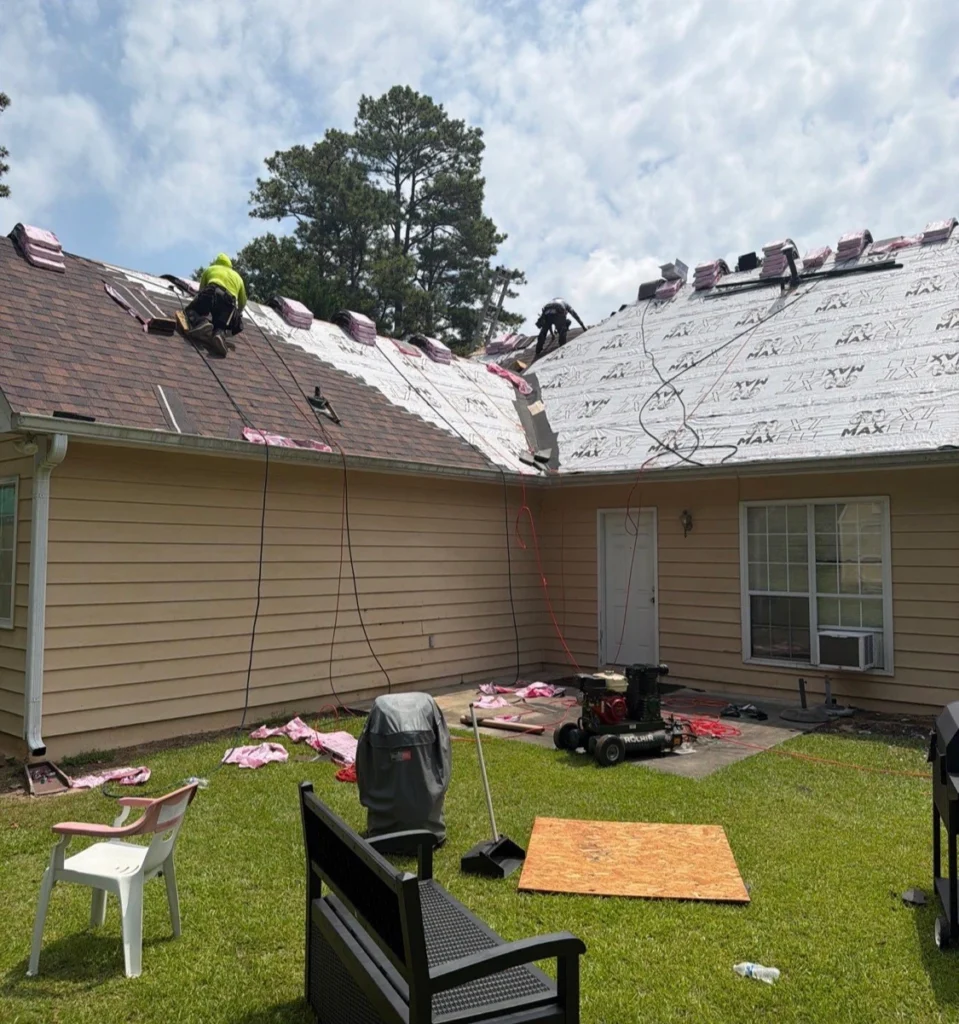
We Document Everything Your Adjuster Needs You get dated, high-resolution photos of every damaged area, a written scope of work, and measurements. We meet your adjuster at the property and walk the roof with them so nothing gets missed from the ground.

We are roofing contractors, not public adjusters. We document damage, provide our estimate, and communicate with your adjuster about the work itself. Filing the claim, interpreting your policy, and negotiating coverage stay between you and your carrier — Georgia licenses public adjusting separately, and any contractor who offers to handle all of that is operating outside their license.

Most Georgia Policies Close Claims at 12 Months File within 12 months of the storm date. Many Georgia carriers also apply a separate wind and hail deductible of 1-2% of your dwelling coverage rather than a flat amount, which puts a typical deductible at $3,000-$8,000 on a $300,000-$400,000 home.

Check your declarations page for the wind/hail deductible before you file. Georgia law prohibits a contractor from waiving, rebating, or absorbing your deductible, so treat any such offer as a warning about the company making it.

Storm Hit Your Home? We’re Ready 24/7

Same-day emergency tarping and free damage documentation across Metro Atlanta.

Our Related Services

Complete roofing systems on new construction, home additions, and detached structures. Deck to ridge, permit pulled, no tear-off required. 

Roof Replacement Services

Full tear-off to the deck, decking replacement where needed, and a new manufacturer-backed system. Most homes finish in one day.

Targeted fixes for leaks, missing shingles, failed flashing, and cracked pipe boots. Repairs run $150-$1,200 on most Sandy Springs homes.

Free six-area inspection covering shingles, flashing, ventilation, decking, attic moisture, and drainage. Photo-documented report the same day. 

Targeted fixes for cracked panels, loose seams, and rotted sections. Repair fits damage under 15% of one elevation, no full tear-off needed.

Why Atlanta Homeowners Trust Us for Storm Damage Restoration

Licensed & Insured Installers

General liability and workers’ compensation coverage, with certificates provided before work begins. Owens Corning Preferred Contractor status requires verified licensing and active insurance.

Direct Insurance Claim Assistance

Photo-documented damage reports, written scope of work, and an on-site meeting with your adjuster. Documentation an adjuster can act on, produced within 24 hours of the inspection.

Fast Emergency Response Time

Same-day response on active leaks and exposed roof sections across Metro Atlanta. Tarping stops the damage while the claim moves through your carrier.

Local, Atlanta-Based Team

A local company you can reach after the storm chasers leave town. Out-of-state crews follow hail events, work fast, and disappear before the warranty matters.

Storm Damage Restoration Service Areas Near Atlanta

Elevated Roofing Solutions provides residential storm damage restoration in Atlanta, GA and nearby Metro Atlanta communities within our active service area.

Homeowners call after wind events, hail, fallen trees, and tropical storm remnants for emergency tarping, damage documentation, and full exterior restoration.

What Atlanta Homeowners Say About Our Storm Damage Services

Frequently Asked Questions

We respond same day on active leaks and exposed roof sections across Metro Atlanta. Emergency tarping happens on the first visit when the roof is safe to access. Response slows during large hail events when hundreds of homes report damage at once, so calling early puts you ahead of the queue.

Yes, in most cases, since standard Georgia homeowners policies cover sudden wind and hail damage. Coverage depends on your policy, the documented damage, and filing within the deadline. Carriers deny claims where damage reads as age and wear rather than a specific event, which is why documentation soon after the storm matters.

Hire a professional. Wet and damaged roofs cause falls, and a DIY patch that hides damage can void your claim, since adjusters need to see the original condition. Photograph everything from the ground and leave roof access to a licensed contractor.

With an approved claim, you pay your deductible. Many Georgia carriers apply a wind and hail deductible of 1-2% of dwelling coverage, which runs $3,000-$8,000 on a $300,000-$400,000 home. Without a claim, emergency tarping runs $300-$800, targeted repairs run $150-$1,200, and full roof replacement runs $8,500-$16,000.

Take four steps in order: check for hazards and stay clear of downed lines and standing water, photograph all damage from the ground, arrange emergency tarping on exposed areas, then call a licensed contractor for a roof-level inspection. Document before you clean up, since removing debris removes evidence.

Book Your Free Residential Storm Damage Inspection in Atlanta

Free storm damage inspection with photo documentation your adjuster can work from. Elevated Roofing Solutions handles emergency tarping, roof, siding, gutter, and fascia restoration across Metro Atlanta.